
magic vs K27 3-2: Европын qualifier таван map үргэлжилсний эцэст шийдэгдэв
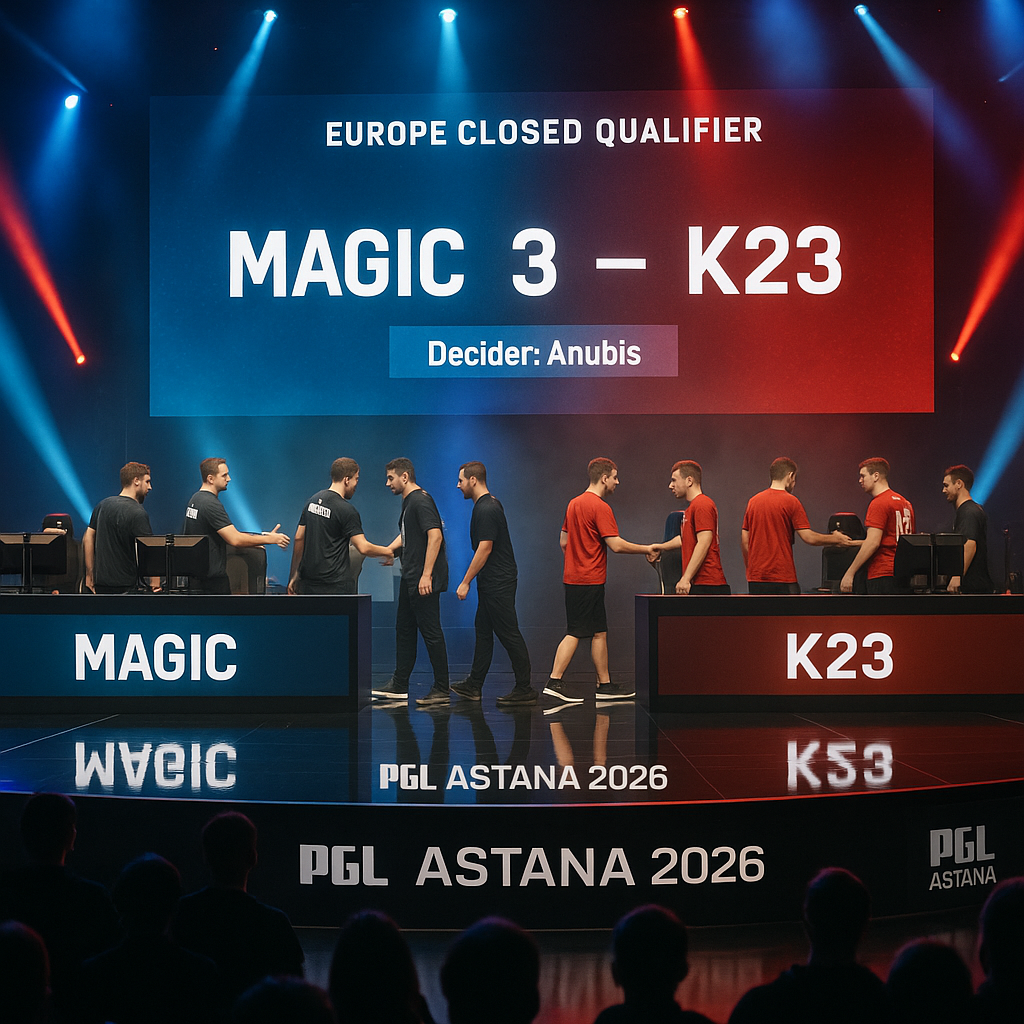
The Europe Closed Qualifier for PGL Astana 2026 produced a close encounter between magic and K27 that required the full sequence of maps to decide the outcome. Played on April 2, 2026, the series stretched to five maps and finished 3-2. The match was part of the qualifier bracket action and drew attention for its veto sequence and the eventual decider map.
Intro: context and format
The fixture took place during the PGL Astana 2026 Europe Closed Qualifier and was played on April 2, 2026. Available reports and match pages indicate the series extended to five maps before a winner was determined. Coverage includes result posts and VOD links that document the full progression of the match.
Because this tie went the distance, it served as a clear example of how map choices and vetoes matter in tightly matched series. The veto order and map picks shaped tempo and strategy throughout the encounter, with a final map left to decide the series.
Main section 1: Map veto and pick sequence
The map veto and pick sequence is recorded as follows: magic removed Nuke, while K27 removed Inferno. After those bans, the pick order proceeded with magic selecting Ancient, K27 choosing Mirage, and magic then taking Dust2. K27 responded by picking Overpass, leaving Anubis as the final map to be played.
This specific order of removals and selections determined tactical matchups and allowed both teams to play on maps they had prepared for. The presence of Ancient, Mirage, Dust2, and Overpass ensured a mix of map types and required adaptability from both sides. Anubis, left as the decider, served as the tiebreaker after the first four maps produced a split that necessitated a fifth map.
Main section 2: Match flow and implications
The series extending to five maps indicates alternating control across the matchup rather than a single dominant performance. When a qualifier tie reaches a fifth map, the psychological and strategic stakes rise: teams must adjust to both opponents content and the pressure of a decider environment.
Reports from match pages and recap sites include the final result and VODs, which allow viewers to review pivotal rounds and momentum shifts. Analysts and viewers often look to map pick strategies and in-series adjustments to understand how a 3-2 finish unfolded in such encounters.
For teams in a closed qualifier, surviving a five-map series can have immediate bracket implications. Matches that go the distance often influence future matchups through fatigue, confidence swings, and the revealed tactical tendencies each side displayed during the veto and on specific maps.
Main section 3: Broader takeaways for the qualifier
Within the context of the Europe Closed Qualifier, a 3-2 result in a high-stakes match demonstrates the competitive depth of the field. The veto sequence—starting with the removal of Nuke by magic and Inferno by K27—shows how teams prioritize map pools and aim to steer the series toward favorable terrain.
The fact that Anubis remained as the decider highlights how both sides navigated to a final, neutral ground after exercising their picks. Observers can use the match as a case study in pick-ban strategy during closed qualifier play, especially when teams are closely matched and prepared for multiple surfaces.
Conclusion
The meeting between magic and K27 at the PGL Astana 2026 Europe Closed Qualifier on April 2, 2026 ended in a 3-2 result following five maps. The documented veto and pick order—magic removing Nuke, K27 removing Inferno, picks of Ancient, Mirage, Dust2, Overpass, and Anubis left as the decider—shaped a competitive series that required a final map to settle the score.
Match pages and recap outlets provide VODs and further breakdown for those who wish to study the individual maps and turning points. As a snapshot of qualifier-level competition, this tie underscores the importance of map strategy and in-series adaptability when teams contest for progression in a closed qualifier setting.